September 2025
One TikTok, Many Consequences: When Nurses Forget Who’s Watching.
When Humour Goes Too Far in Nursing
Humour has always been part of nursing. For many of us, it is a coping mechanism, a release valve, and sometimes the only way to get through a shift that is relentless, emotional, or frankly unpleasant. But in the modern age of social media, the line between private coping and public misconduct has blurred, sometimes with career-ending consequences.
Recently, a group of healthcare workers in California were dismissed after a TikTok video emerged showing staff mocking what appeared to be pap smear discharge left on exam room paper in a gynaecology office. In the images, one nurse gave a thumbs-up next to the stain, another posed with her tongue out near the exam chair, and captions joked “Guess the substance.” The video went viral and quickly triggered outrage.
To be clear, no confidential patient information was revealed. But the workplace was identifiable, and therefore the reputation of the employer was jeopardised. The question then arises: did this also bring the profession of nursing itself into disrepute?
Professional Trust
Trust is the bedrock of the nurse–patient relationship. Patients come to us at their most vulnerable, often embarrassed by symptoms or bodily functions that feel shameful. We reassure them: this is normal, this is routine, you don’t need to feel embarrassed. And they believe us. They trust that their dignity is preserved, even when the situation is intimate or unpleasant.
Take the example of emptying a catheter bag. For nurses, it is a routine task we do not think twice about. For a patient, it may be their first time, deeply embarrassing and a stark reminder of dependency. Our job is to normalise it, reassure them, and provide care without judgement.
What we do not do is voice our inner monologue. Traditionally, those darker thoughts, the banter and gallows humour, stayed in the staff room. It was the unspoken agreement: laugh, release the tension, then get back to work and present a professional front.
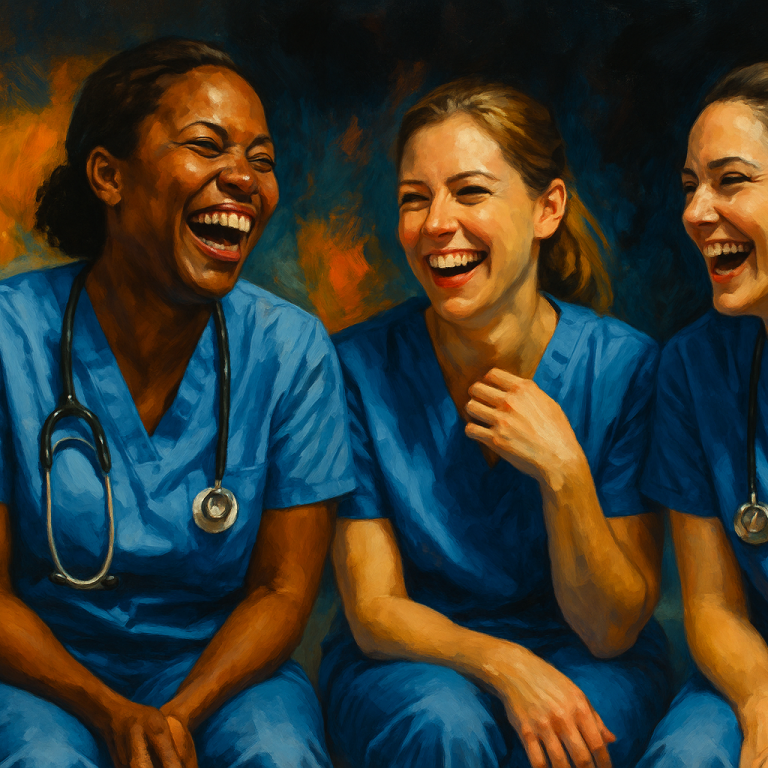
But today’s “staff room” has become TikTok, Instagram, and Twitter. Instead of whispered jokes among colleagues, we record, caption, and share them with the world. What feels funny in the moment may be seen by thousands, and not everyone shares our perspective.
Why Black Humour Exists in Nursing
It is important to acknowledge that black humour is not inherently malicious. It exists because nursing exposes us daily to trauma, death, suffering, and bodily realities that can be overwhelming. Humour becomes a coping strategy, helping staff find release and preventing burnout. It also builds camaraderie, providing a sense of solidarity and connection between colleagues in high-pressure environments. At times, it helps to normalise experiences that, outside of healthcare, would feel shocking or bizarre.
There are even positive aspects to black humour. Used carefully, it can strengthen resilience, reinforce team bonds, and create moments of relief in otherwise heavy situations. But context matters. Used privately among colleagues, it can heal. Used publicly, it can harm.
The Cost of Crossing the Line
The Californian nurses may have thought their video was harmless. They did not name a patient, nor did they break HIPAA. But by mocking bodily fluids and making their workplace identifiable, they damaged trust with their employer, their patients, and the wider public.
Were they right to be sacked? In strict contractual terms, yes. Their behaviour was a breach of employer policy, an “outright violation” as Sutter Health put it.
In the UK context, filming on NHS premises while in uniform is only likely acceptable if it is positive and authorised. Anything else risks disciplinary action. Proving whether it was on work time or not may not even matter. If you are identifiable as NHS staff and the video harms reputation, you are accountable.
Reflection
Morally, it was a serious lapse of judgement, hopefully a one-off. I like to think these were otherwise excellent nurses, carried away in the moment of silliness. But the damage is done.
As I get older, I find myself less tolerant of this kind of humour. I do not like dark humour as much now, but I can remember being 18 and laughing at things that, in hindsight, I am relieved were never recorded. By the grace of God, smartphones were not in our pockets back then.
This story is not just about a viral TikTok. It is about professionalism in the digital age. Nurses are human, with coping strategies, banter, and bad days. But once our jokes leave the break room and enter the public sphere, they stop being ours alone. They belong to everyone. And sometimes, the cost is your career..