August 2025
Incivility in Healthcare: The Quiet Harm We Don’t Always See
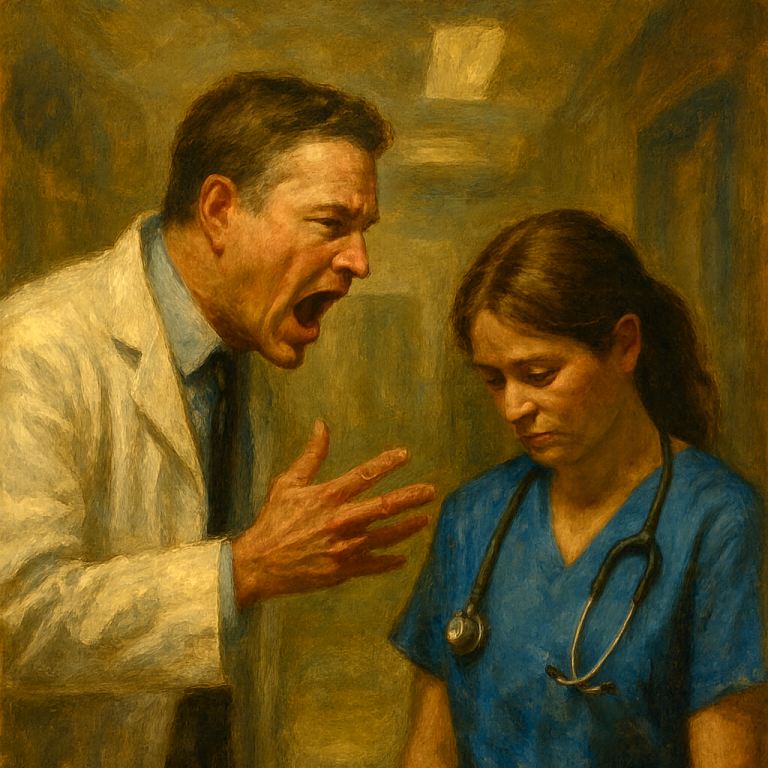
I was speaking recently with a colleague, an experienced nurse with decades of practice behind her, who found herself on the receiving end of a notoriously sharp and cutting doctor. Sadly, this isn’t rare. Many of us know how it feels when a professional colleague chooses incivility over respect.
✨
Often, when someone is treated cruelly in this way, the bitterness doesn’t end there. It gets passed along, almost like a contagion. The sharp words, the belittling, the dismissal. They travel through the system, landing on the next vulnerable person in line. Hurt people hurt people, and the cycle keeps spinning.
✨
But in this case, something different happened. My colleague didn’t lash out. She didn’t retaliate, gossip, or find someone else to pour her frustration into. Instead, she grew quiet. She internalised the sting of the words, carrying the weight silently. On the surface, she seemed composed, even calm, but underneath, I wondered what it was costing her.
✨
Why Incivility Matters in Healthcare
Incivility in healthcare isn’t just about rudeness or bruised feelings. Research has consistently shown it can have serious consequences:
Patient Safety: A well-known study in BMJ Quality & Safety (2017) found that incivility can impair team communication and clinical performance, leading to mistakes and compromised care.
Mental Health: Repeated exposure to incivility increases the risk of burnout, stress, and even depression among healthcare professionals (American Journal of Nursing, 2019).
Workplace Culture: Incivility spreads like wildfire. Studies have shown that even witnesses (not just direct targets) are more likely to demonstrate reduced empathy and higher stress after observing uncivil behaviour.
In short: disrespect doesn’t just sting in the moment. It ripples outward, threatening both staff well-being and patient outcomes.
✨
A Question Left Hanging
And yet, as I thought about my colleague, I kept returning to one question. She didn’t pass on the cruelty she received. She chose silence. But in doing so, did she turn that cruelty inward?
Will the cost of not sharing those hurtful feelings come back to harm her in another way ? mentally, emotionally, or even physically? And if so, who bears responsibility for that harm? The doctor who inflicted the words? The system that allows incivility to continue unchecked? Or all of us, for not doing more to make sure healthcare is a place where respect is the default?
✨ Sometimes the deepest wounds in healthcare aren’t the ones we see, but the ones carried quietly.✨