September 2025
Back in My Day: What We Leave Behind in Nursing
The other day, a young nurse complained to me about how the older nurses are always saying, “In our day things were better, we were more dedicated, the standards were higher, the teams were closer, the nights out were crazier, the patients were cared for… even our patients were nicer”
🩺
At first, I nodded along, but then I realised something. This person she was complaining about hadn’t been in the department as long as I have, and I often do exactly the same thing! I catch myself fondly telling stories from my early days, nursing in my 20s in a small Emergency Department. The team seemed tighter and life in the department had its own brand of chaos and magic.
🩺
It made me feel a little awkward, because while I understood her point, I also empathised with the nurse she was referring to. The truth is, I do prefer the old days sometimes. Things were different, not better or worse, just different. Respect among colleagues and patients felt different. The atmosphere had a different energy.
🩺
I thought back to a Sister I’d been especially fond of, and the wild shenanigans she once had working abroad in the ’80s and how she was asked to leave a country and not come back for something in the UK we would laugh at. I told that story recently in our staff room, and no one in the room even knew who she was. Yet, she had been a pillar of our department, working there right up until shortly before she died. She gave her whole life to nursing, and so much of it to our very department. It saddened me that nothing marked her contribution or memory.
🩺
That’s when I began to wonder: what will we be remembered for?
We often talk about the big names, Clara Barton, who founded the Red Cross; Florence Nightingale, who redefined modern nursing; Edith Cavell, who embodied the spirit of nursing in war. Their legacies are written in history books.
But what about us? The everyday nurses who show up, shift after shift, caring, advocating, teaching, and shaping the culture of our departments in ways that don’t make the headlines.
🩺
This thought inspired my next set of social media posts and how the past shapes how we practice today. The first story I came across was the cholera outbreak of 1854.
At the time, germ theory hadn’t yet been established. No one knew exactly what caused the disease, but they knew it spread like wildfire, bringing dehydration, diarrhoea, and death within hours. There were no effective treatments, no antibiotics, no IV fluids. Nurses entered homes and makeshift hospitals armed with little more than soap, clean linen, and the determination to provide comfort in the face of despair.
🩺
Their contribution was immense. While doctors debated theories of “miasma” (bad air) and argued in lecture halls, nurses were at the bedsides. They encouraged families to boil water, improve sanitation, and isolate the sick. Practical measures that reduced spread long before the science caught up. They kept patients hydrated with broths and oral rehydration solutions improvised from whatever was at hand. They cleaned soiled bedding, promoted fresh air, and offered comfort in an era when survival often came down to small mercies.
🩺
And then came John Snow’s famous intervention: the removal of the Broad Street pump handle in London. His discovery, that cholera was spread through contaminated water, not air, revolutionised public health. Today, there’s still an annual lecture in London honouring that moment.
🩺
But Snow’s findings would have meant little without the tireless work of the nurses who stood on the frontlines. They were the ones who translated theory into practice, teaching hygiene, caring for the dying, and supporting communities through repeated waves of outbreak. In many ways, they laid the groundwork for the principles we still uphold: infection control, public health nursing, and patient education.
🩺
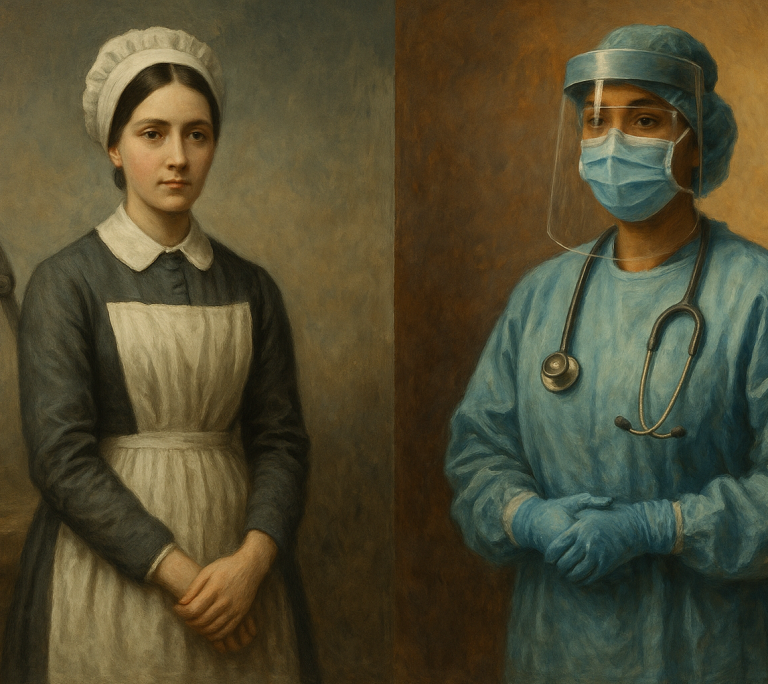
Fast forward to the COVID-19 pandemic, and we see the same themes emerge: nurses leading the way in infection prevention, teaching communities about masks and handwashing, holding hands in isolation wards, and adapting care in impossible circumstances. The tools may be different, but the spirit is unchanged.
🩺
Thinking back to my late colleague, I realised the same truth applies on a smaller, personal scale. I remember the things she taught me, the support she gave me, the admiration I had for how she managed the department and all its pressures whilst seemingly knowing everything, she would let the junior doctors find their way guiding and steering them. Then the junior nurses, that she would encourage to question and speak up when something concerned them. She taught me I had worth in the team even as a junior when you feel so insignificant and out of your depth. I hope these are lessons I’ve since passed down to the next generation in my job as an educator, I build confidence through knowledge. She shaped me, and through me, she shaped others.
🩺
We don’t always realise the impact we have on those around us. Sometimes it’s the tiniest lesson, the laughter and in jokes – you had to be there kind of thing, the calm in chaos, or the way we show up every day. We may never know what others will remember about us, but, they will remember.
🩺
Every nurse leaves a legacy. Some names are etched into history. Others are etched into our being. Both matter.